English
  日本語
日本語  한국어
한국어  français
  Deutsch
  Español
  italiano
  русский
  العربية
  Türkçe
  tiếng việt
Feb 10, 2026
AGV drive wheels are active, motor-driven motion systems designed for precision control, navigation accuracy, and automated operation, while traditional industrial wheels are passive load-bearing components intended primarily for manual or semi-assisted movement. The difference is not limited to power supply—it extends to control logic, structural integration, load behavior, maintenance strategy, and long-term operational efficiency.
Understanding these differences is essential when designing or upgrading automated material handling systems.
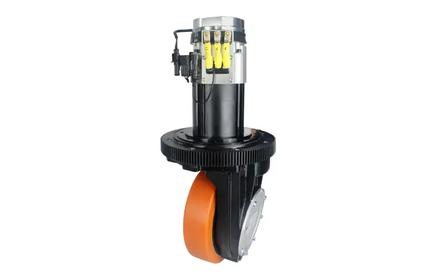
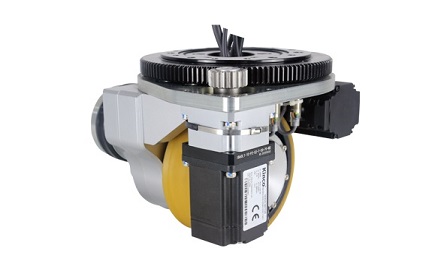
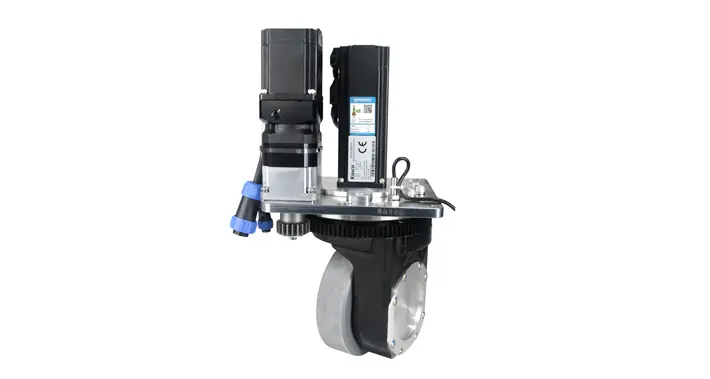
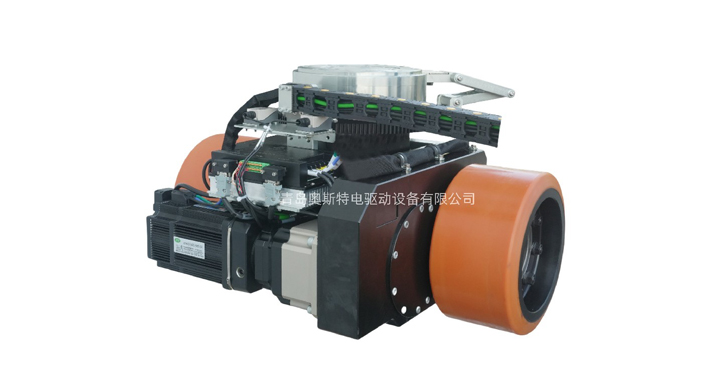
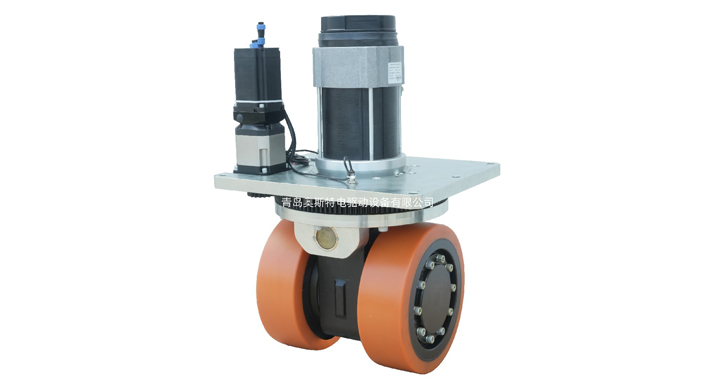
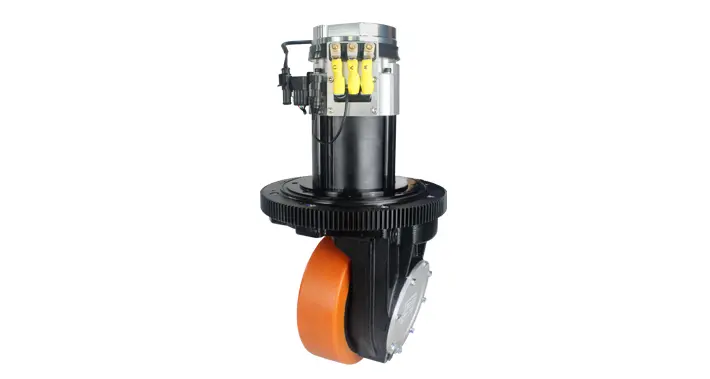
AGV automated guided vehicle drive wheels integrate AGV wheel motor, gearbox, encoder, braking, and wheel material into a single engineered unit. Traditional industrial wheels—such as casters, trolleys, and forklift drive wheels—rely on external force or vehicle motion and have no autonomous control capability.
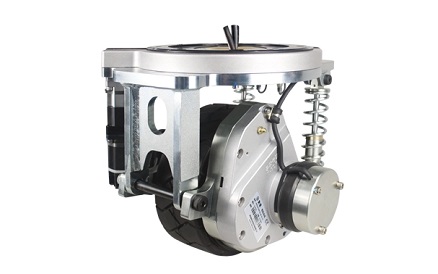
In automated systems, this distinction directly affects navigation precision, repeatability, and safety compliance.
Yes. AGV drive wheels are electrically powered and digitally controlled. Each wheel responds to commands from the AGV controller, enabling:
Controlled acceleration and deceleration
Accurate turning and path correction
Encoder-based positioning feedback
Traditional industrial wheels have no integrated power or control system. They rotate freely and depend on manual pushing, towing, or external drive mechanisms.
AGVs must follow predefined routes, stop at exact positions, and repeat movements thousands of times with minimal deviation. AGV drive wheels support this through:
High-resolution encoders
Consistent torque output
Low-slip tread design
Traditional wheels are not designed for positional accuracy. Small variations in floor condition, load, or push force can result in unpredictable movement, making them unsuitable for autonomous navigation.
In static load terms, some industrial wheels can support heavy weights. However, AGV drive wheels are engineered for dynamic load conditions, including:
Start-stop cycles
Direction changes under load
Continuous operation
AGV wheels distribute torque more evenly and maintain traction during motion, reducing the risk of load shift or wheel slip—especially critical in automated pallet handling.
AGV drive wheels are designed as modular drive units that integrate directly with:
Vehicle control systems
Safety PLCs
Navigation sensors
They support communication protocols and feedback loops required for modern AGV and AMR platforms.
Traditional industrial wheels are mechanically mounted and not connected to any control architecture, limiting their role to passive movement only.
AGV drive wheels are optimized for specific floor types, such as:
Polished concrete
Epoxy-coated floors
Industrial tiles
Wheel materials (PU, rubber, composite) and tread designs are selected to balance traction, noise reduction, and floor protection.
Traditional wheels prioritize durability and load capacity, often at the expense of floor wear, noise, or vibration control.
While AGV drive wheels have a higher upfront cost, they typically offer lower total cost of ownership due to:
Predictable wear patterns
Scheduled preventive maintenance
Reduced floor damage
Traditional industrial wheels may appear economical initially, but frequent replacements, inconsistent performance, and higher downtime can increase operational costs in automated environments.
AGV drive wheels support safety functions such as:
Controlled braking
Emergency stop response
Speed limitation in shared spaces
These features are essential for compliance with modern industrial safety standards. Traditional wheels provide no active safety functionality and rely entirely on external systems or human operators.
| Feature | AGV Drive Wheels | Traditional Industrial Wheels |
Power source | Integrated motor | None (passive) |
Control capability | Digital, programmable | Manual or external |
Positioning accuracy | High | Low |
Automation compatibility | Designed for AGVs/AMRs | Not suitable |
Maintenance strategy | Predictive & scheduled | Reactive |
Safety integration | Yes | No |
In limited cases, traditional wheels may serve as passive support casters, but they cannot replace AGV drive wheels in propulsion or steering roles.
Not necessarily. When properly matched to load and floor conditions, AGV drive wheels often exhibit more consistent and predictable wear than industrial wheels.
Yes. Drive wheel diameter, tread material, motor power, and encoder resolution can be tailored to specific applications.
From a manufacturer and supplier standpoint, the most common automation issues we encounter stem from treating AGV drive wheels as simple mechanical components. In reality, they are mechatronic systems that directly influence navigation accuracy, system uptime, and operator safety.
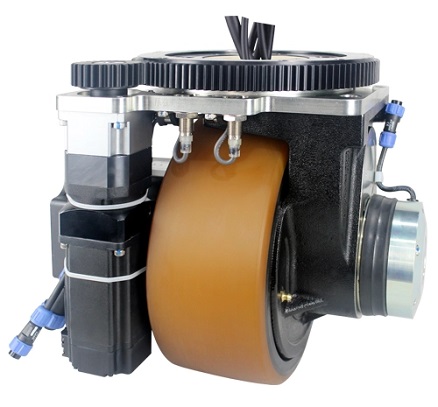
At Honest Edrive, we work with integrators and OEMs to ensure drive wheel specifications align with vehicle weight, duty cycle, floor condition, and control architecture. The right choice reduces commissioning time, minimizes maintenance risk, and improves overall system reliability.
When automation performance matters, the difference between AGV drive wheels and traditional industrial wheels is not theoretical—it is operational.