English
  日本語
日本語  한국어
한국어  français
  Deutsch
  Español
  italiano
  русский
  العربية
  Türkçe
  tiếng việt
Feb 18, 2026
Motorized AGV drive wheels provide active propulsion, precise speed control, and positioning accuracy, making them essential for autonomous navigation. Non-motorized wheels serve supporting, stabilizing, or load-bearing roles and cannot replace powered wheels in AGV motion systems. The choice is not about preference—it defines how an AGV moves, navigates, and performs under real operating conditions.
Below is a technical comparison based on AGV design, system integration, and long-term operational performance.
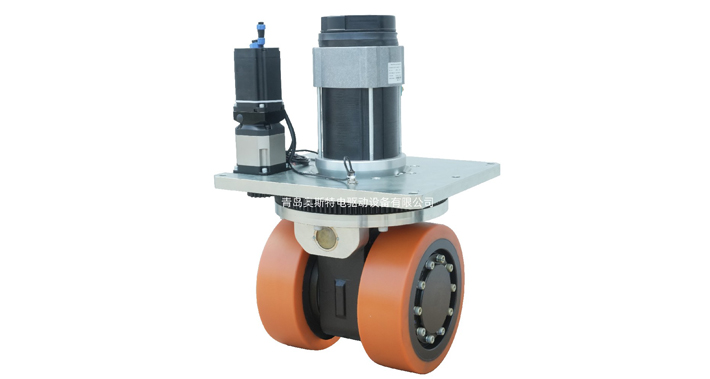
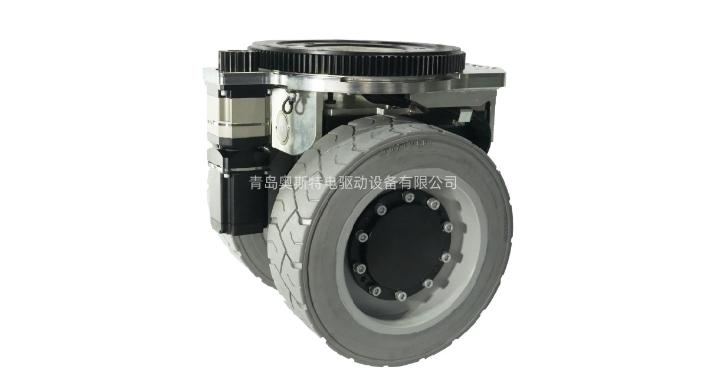
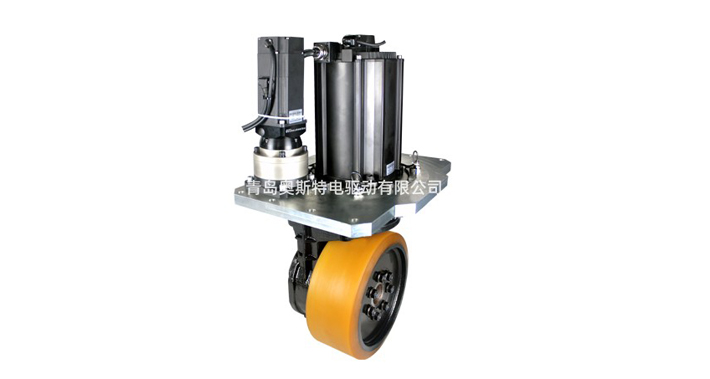
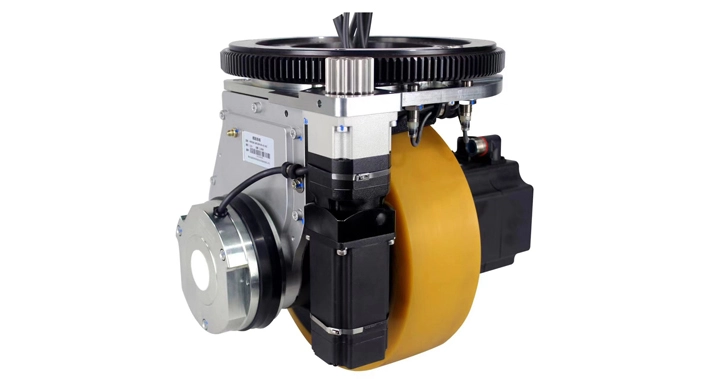
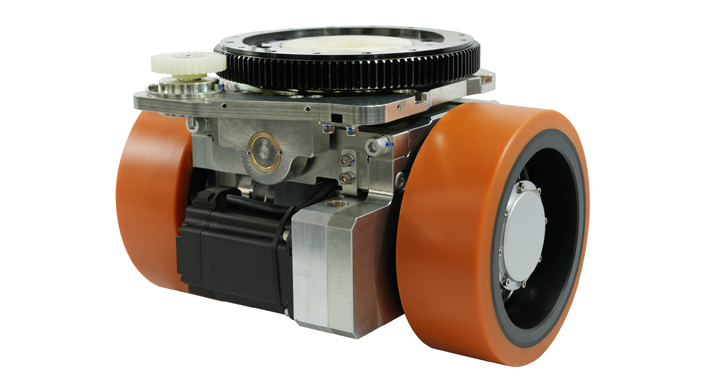
Motorized AGV wheels integrate a motor, gearbox, encoder, brake, and wheel assembly into a single unit that actively drives the vehicle. Non-motorized wheels—such as passive wheels or casters—rotate freely and rely on motorized wheels or external force to move.
In an AGV system, these two wheel types play fundamentally different roles.
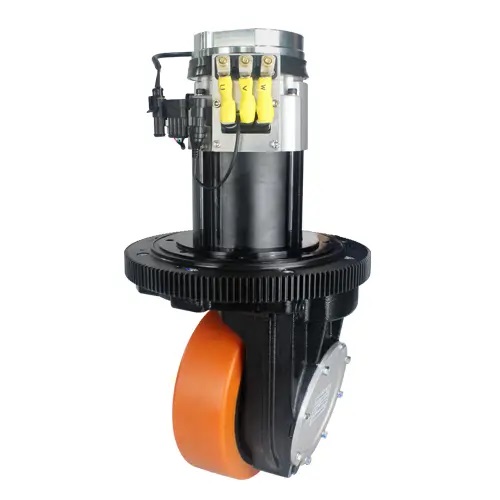
AGVs must move autonomously, follow programmed paths, stop at exact positions, and repeat movements reliably. Motorized drive wheels enable:
Controlled acceleration and deceleration
Accurate turning through differential speed control
Encoder-based position feedback
Integration with navigation and safety systems
High navigation accuracy
Stable performance under dynamic loads
Full compatibility with AGV and AMR controllers
Support for braking and safety functions
Higher upfront cost
More complex integration and commissioning
Requires electrical and control system alignment
All AGV and AMR propulsion systems
Pallet movers and towing AGVs
Precision positioning vehicles
Motorized wheels are the core motion components of any autonomous vehicle.
Non-motorized wheels are used for support, balance, and load distribution. They do not provide propulsion or steering.
Simple mechanical structure
Low cost and easy replacement
Suitable for stabilizing heavy loads
No propulsion or control capability
Cannot contribute to navigation accuracy
Increased wear if improperly loaded
Support casters
Balancing wheels in multi-wheel AGVs
Auxiliary load-bearing positions
Non-motorized wheels complement, but never replace, motorized drive wheels.
An AGV cannot operate autonomously using only non-motorized wheels. At least one motorized drive wheel is required to generate motion and enable control. Systems relying solely on passive wheels require external pushing or towing, which eliminates automation.
Motorized wheels use encoders and closed-loop control to track rotation, speed, and direction. This allows the AGV controller to correct deviations in real time. Non-motorized wheels provide no feedback, making them unsuitable for navigation or positioning tasks.
Motorized wheels are engineered to manage dynamic loads, including starting, stopping, and turning under full payload. Non-motorized wheels are designed primarily for static load support and must be carefully matched to avoid uneven wear or instability.
Motorized wheels require professional maintenance but offer predictable wear and scheduled servicing. Non-motorized wheels are cheaper individually but may require frequent replacement if load distribution is incorrect.
In most AGV systems, optimizing the ratio and placement of motorized to non-motorized wheels reduces overall maintenance costs.
| Aspect | Motorized Wheels | Non-Motorized Wheels |
Propulsion | Yes | No |
Control & feedback | Encoder-based | None |
Role in navigation | Primary | None |
Load handling | Dynamic & static | Mainly static |
Cost | Higher | Lower |
System importance | Critical | Supporting |
This depends on payload, maneuverability, and floor conditions. Common configurations include single, dual, or four motorized wheels.
Indirectly. Poorly aligned or worn passive wheels can increase drag or vibration, impacting overall motion stability.
Yes, but converting passive wheels into motorized units requires structural and control system redesign.
In real-world AGV projects, performance issues often arise not from motor failure, but from improper allocation between motorized and non-motorized wheels. Too few motorized wheels reduce traction; poorly selected passive wheels increase resistance and wear.
At Honest Edrive, we support OEMs and integrators by optimizing wheel layouts—matching motorized drive units with correctly specified non-motorized support wheels to achieve stable motion, accurate navigation, and long service life.
Understanding the roles, advantages, and limitations of both wheel types is essential for building reliable and scalable AGV systems.