English
  日本語
日本語  한국어
한국어  français
  Deutsch
  Español
  italiano
  русский
  العربية
  Türkçe
  tiếng việt
Aug 30, 2026
Polyurethane is the best all-round material for most indoor AGVs. It provides a practical balance of traction, wear resistance, load capacity, noise control, and floor protection. Rubber is more suitable where grip and vibration absorption are the priorities, while nylon performs best under high static loads on smooth, controlled floors.
The final choice should not be based on load capacity alone. Engineers must also consider whether the wheel transfers motor torque, supports the chassis, swivels during turning, or operates continuously over floor joints and ramps.
| Selection factor | Polyurethane | Rubber | Nylon |
|---|---|---|---|
| Traction | Good and consistent | Highest | Relatively low |
| Rolling resistance | Low to moderate | Higher | Very low |
| Wear resistance | Excellent | Moderate | Excellent |
| Noise level | Low | Very low | High |
| Shock absorption | Good | Excellent | Limited |
| Floor protection | Very good | Good | Limited on sensitive floors |
| Typical use | Drive and support wheels | High-grip applications | Support and caster wheels |
HAGV Wheel generally recommends polyurethane as the default option for indoor AGVs, rubber for uneven or slippery routes, and nylon for specialized applications with smooth floors and predictable operating conditions.
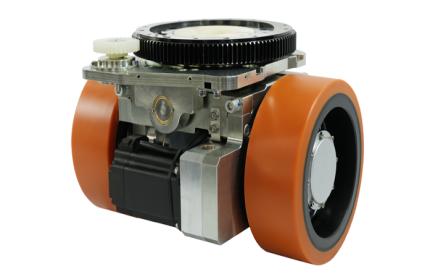
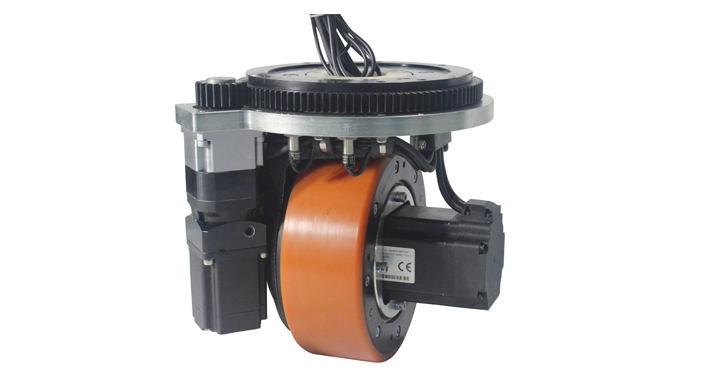
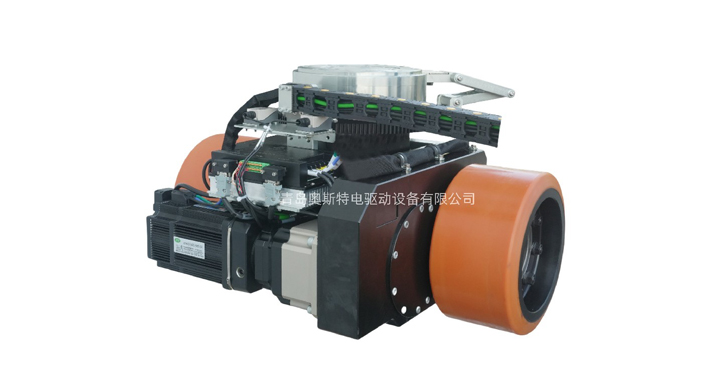
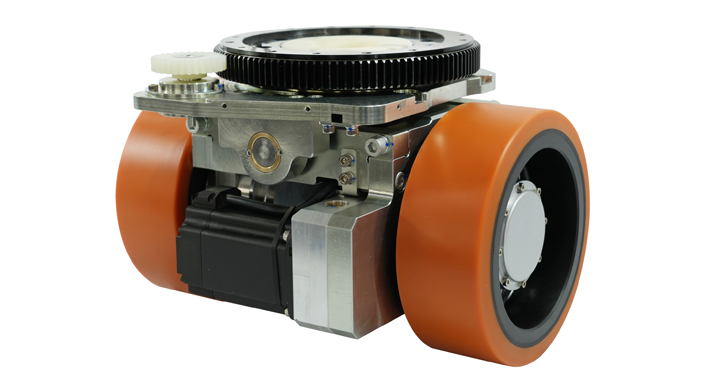
Polyurethane combines the elasticity of rubber with greater resistance to abrasion and repeated deformation. This makes it particularly suitable for the agv wheel drive, where the tread must transfer acceleration, steering, and braking torque without excessive slip.
PU wheels are commonly selected for:
Automated warehouses with epoxy or concrete floors
Pallet-moving AGVs and AMRs
Production lines requiring low noise
Vehicles with frequent start-stop cycles
Applications where floor marking must be minimized
The hardness of the PU compound must still match the load. A tread that is too soft may deform, increase motor current, and reduce positioning consistency. An excessively hard tread may generate more vibration and lose traction on dusty surfaces.
For most indoor systems, a medium-to-hard polyurethane tread provides the most stable compromise between rolling efficiency and grip. HAGV Wheel also identifies PU as the most widely used AGV drive-wheel material because it balances traction, wear life, noise, and floor protection.
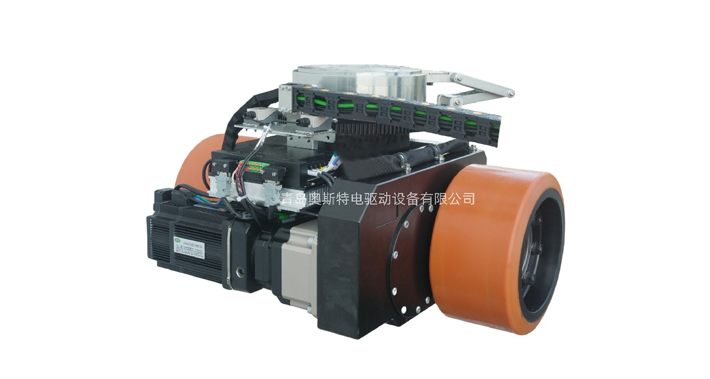
Rubber is preferable when the route demands maximum grip or vibration damping. Its greater elasticity helps the wheel maintain contact with irregular surfaces and reduces shock transmitted to the chassis, sensors, and payload.
Rubber wheels are appropriate for:
Rough concrete floors
Semi-outdoor operating areas
Ramps and sloped routes
Dusty or occasionally wet surfaces
AGVs transporting vibration-sensitive loads
The trade-off is higher rolling resistance. A rubber wheel normally requires more drive torque than a comparable PU or nylon wheel. It may also wear faster during continuous high-load operation or frequent zero-radius turning.
Rubber should therefore be selected because the application requires additional traction—not simply because it is softer or quieter.
Nylon wheels can carry high loads while producing very little rolling resistance. They are also resistant to many oils, greases, and cleaning chemicals. However, their hardness provides limited shock absorption and creates higher contact pressure on the floor.
Nylon is usually more suitable for:
Smooth, level industrial floors
Clean or hygienic operating areas
Slow-moving support-wheel positions
Applications where low rolling resistance is critical
Environments exposed to oils or cleaning agents
Nylon is rarely the first choice for a powered drive wheel because its lower friction can cause slip during acceleration or braking. Encoder-based navigation may also require more frequent correction when wheel-to-floor traction is inconsistent. HAGV Wheel similarly positions nylon as a specialized option rather than the standard material for dynamic AGV drive systems.
Not necessarily. The powered wheel and supporting wheels perform different functions.
A drive wheel must generate traction and accurately transfer motor torque. Supporting agv casters mainly carry weight, follow steering movement, and maintain chassis stability. Using the same material in every position may therefore create unnecessary rolling resistance or insufficient grip.
Common combinations include:
PU drive wheel + PU casters: Balanced solution for indoor warehouses
PU drive wheel + nylon casters: Good traction with lower support-wheel resistance
Rubber drive wheel + PU casters: Suitable for routes requiring extra driving grip
PU drive wheel + rubber casters: Useful when additional vibration isolation is required
Caster swivel resistance must also be considered. A very soft caster tread can increase turning effort, especially under high loads. A very hard caster can transmit impacts into the frame and reduce wheel contact on uneven floors.
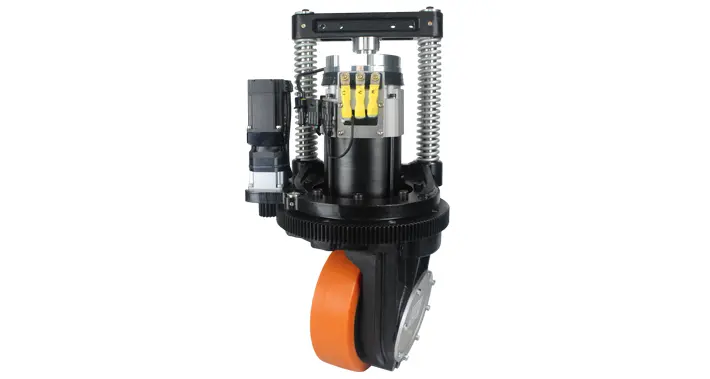
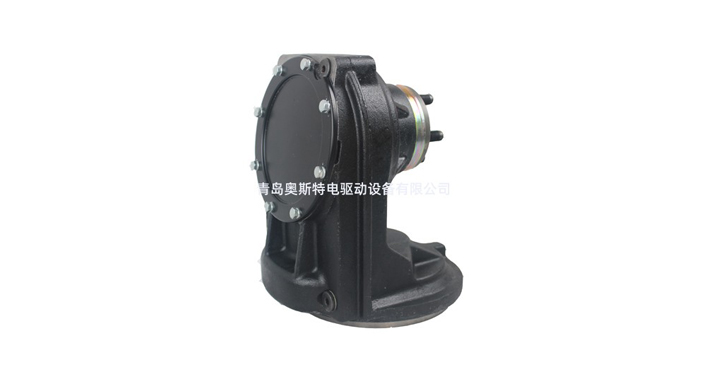
HAGV Wheel’s swivel-wheel range is designed for precise maneuvering and high-load support, including single- and double-wheel configurations.
Before requesting a quotation, provide the wheel manufacturer with:
Maximum vehicle and payload weight
Load carried by each wheel
Drive-wheel and caster arrangement
Floor material and condition
Maximum speed and acceleration
Gradient and turning radius
Daily operating hours
Indoor or outdoor environment
Oil, water or chemical exposure
Required noise and floor-protection level
The material should then be validated under maximum payload. During testing, monitor motor current, wheel slip, stopping distance, tread temperature, noise, and navigation deviation.
PU normally provides the best service life in general indoor AGV applications. Nylon is also highly wear-resistant but may create traction and floor-protection problems.
Non-marking PU is generally the preferred choice because it combines stable traction with good floor protection.
Harder wheels deform less, but they also absorb less impact. Wheel hardness must be balanced against floor condition, load concentration, and traction demand.
Common causes include unsuitable tread material, insufficient load on the driven wheel, floor contamination, excessive acceleration, or an overly hard compound.
Yes. Combining materials can optimize traction, rolling resistance, vibration control, and cost, provided that each wheel position is evaluated separately.
PU is the most versatile choice for most indoor AGVs, especially for powered drive-wheel positions. Rubber is better for rough, slippery, or vibration-sensitive routes, while nylon is most effective as a low-resistance support wheel on smooth floors.
The best AGV design may use different materials for its drive and caster positions. Matching wheel hardness and tread material to the actual load, floor, and duty cycle provides better traction, more accurate navigation, and longer maintenance intervals than selecting every wheel by load rating alone.